
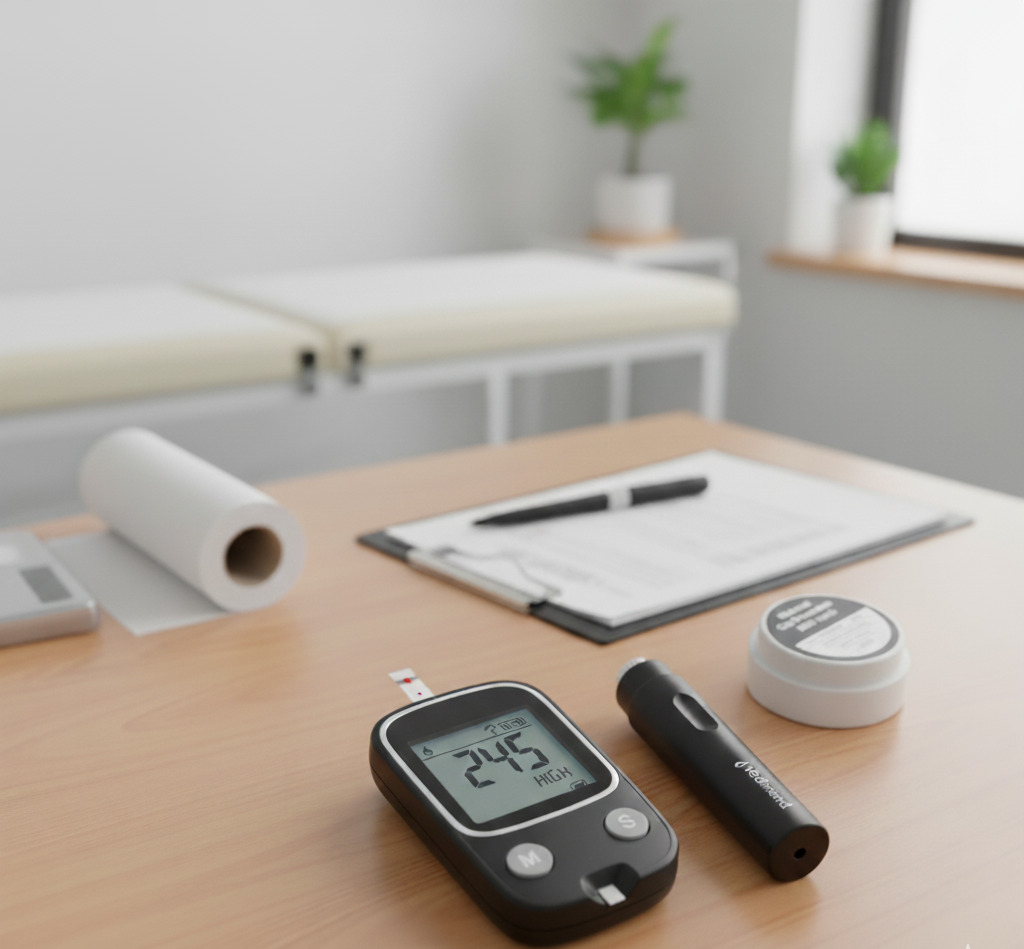
In the world of modern medicine, we are often taught that Type 2 Diabetes (T2D) begins the day your doctor tells you your blood sugar is too high.
But the foundational truth uncovered by the metabolic health movement is that high blood sugar, or hyperglycemia, is merely the final symptom of a problem that has been festering for years.
The true precursor is not high glucose, but Insulin Resistance (IR), driven by a silent, chronic condition known as hyperinsulinemia (too much insulin in the blood).
By the time a diagnosis of diabetes is made based on elevated glucose—the very last domino to fall—massive metabolic damage has already occurred beneath the surface.
To understand this “silent progression,” we must first meet the star of our metabolic show: the hormone insulin. Insulin acts as a “key” that unlocks the “door” on your body’s cells, escorting glucose derived from the carbohydrates you eat out of your bloodstream and into the cells for energy. It is the only hormone solely responsible for preventing blood sugar from rising too high. However, insulin has another critical role: it is your body’s primary fat-storage hormone. When insulin levels are high, it aggressively pushes energy into fat cells and locks the door, preventing that stored fat from being released and burned for fuel.
The trouble begins when we repeatedly flood our system with insulin, typically through the frequent consumption of refined carbohydrates and sugars. Your cells, perceiving this constant high signal as a toxic overload, begin to ignore it. This is a protective mechanism; your cells are effectively shielding themselves from being perpetually overstuffed with energy. This diminished response is the biological definition of Insulin Resistance. This protection mechanism quickly creates a vicious cycle: the more resistant your cells become, the more insulin the pancreas must produce to force the doors open, leading to persistently high insulin levels, or hyperinsulinemia, which only worsens the resistance.
This state of chronic hyperinsulinemia has immediate, detrimental effects on your organs long before your glucose begins to rise. A critical early event is the accumulation of ectopic fat—fat stored within organs not designed for storage, particularly the liver. Because high insulin forces the liver to convert excess glucose and fructose into fat through a process called de novo lipogenesis, the liver becomes overwhelmed. This leads to Non-Alcoholic Fatty Liver Disease (NAFLD), which serves as a crucial “stepping stone” that drives the overall insulin resistance cycle, potentially preceding a T2D diagnosis by a decade or more.
During this initial phase of progression, your body is engaged in a massive compensation effort. Your pancreas works overtime, pumping out maximum levels of insulin to forcibly push sugar into resistant cells. This is why traditional glucose tests (like Fasting Glucose or HbA1c) can look perfectly normal even if you have severe insulin resistance. The extra insulin is effectively masking the overflow problem. In this period, high blood glucose is successfully prevented, but at the costly expense of dangerously high insulin levels—a state of insulin toxicity—which silently drives inflammation, cardiovascular disease, and rapid fat storage.
The tipping point occurs when the pancreatic beta cells—the cells responsible for producing insulin—can no longer keep up with the escalating demands. This beta cell dysfunction is often exacerbated by the fatty liver exporting fat to the pancreas, creating a condition known as “fatty pancreas.” Once this compensatory mechanism fails, the loss of high insulin output causes blood glucose to finally spike, leading to clinical hyperglycemia and a formal diagnosis of T2D. This demonstrates definitively that elevated blood glucose is the ultimate symptom of a system that has failed, not the root cause itself.
Given this silent progression, relying solely on glucose markers is insufficient for true preventative health. This is why metabolic experts emphasize that Fasting Insulin is arguably the single most important clinical marker to check early in your metabolic career. This inexpensive test reveals exactly how hard your pancreas is working to keep your glucose in check. Ideally, your fasting insulin should be below 6 µU/mL; levels above 10 µU/mL strongly suggest that insulin resistance is already taking hold, putting you firmly on the path toward chronic illness.
Ultimately, understanding IR is crucial because it is much more than just “pre-diabetes.” Hyperinsulinemia is the unifying core problem—the single root cause, or lex parsimoniae—that orchestrates a cluster of health catastrophes collectively known as Metabolic Syndrome. This includes high blood pressure (hypertension), unhealthy blood lipids (high triglycerides and low HDL cholesterol), and central obesity. Furthermore, this metabolic dysfunction is now strongly implicated in brain health, leading to conditions like Alzheimer’s disease, which researchers increasingly call “Type 3 Diabetes” due to underlying brain insulin resistance.
For members of The Circle, the solution is clear. We do not aim to simply hide high blood glucose with medication, which is akin to painting over a cracking wall. Instead, we address the root hormonal problem. By adopting a low-carbohydrate lifestyle, we stop the constant flood of glucose, allowing insulin levels to fall dramatically. When we lower insulin, we stop the driver of de novo lipogenesis, allow the liver to heal, and finally break the cycle of resistance. We treat the fire, not just the smoke.