
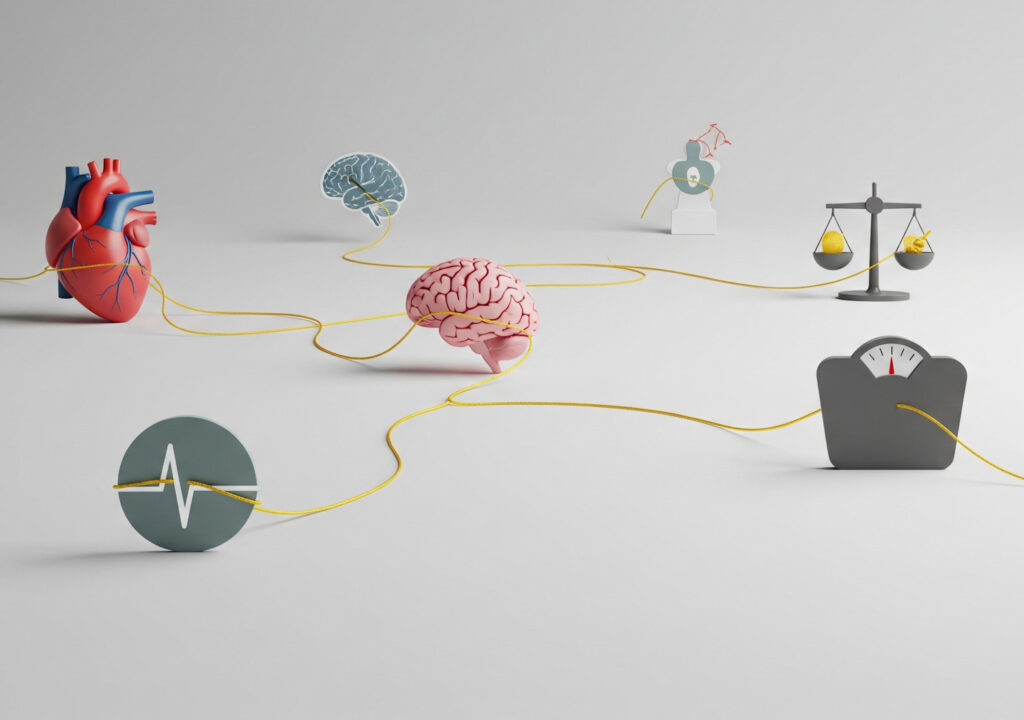
The foundational principle of The Circle program is that a vast array of chronic health struggles are not separate misfortunes, but different manifestations of a single, unifying root cause: Insulin Resistance (IR).
This metabolic perspective, referred to as the “IR and Chronic Disease Link Chart,” reveals that seemingly unrelated conditions share a single, dietary and metabolic root.
Understanding this core metabolic dysfunction is the crucial first step, transforming a confusing list of health problems into one clear path forward. This chart emphasizes that IR is the world’s most common health disorder, potentially affecting as many as 88% of American adults.
1. Metabolic Syndrome, T2D, and Obesity
Insulin resistance is the underlying core problem or the very foundation of Metabolic Syndrome. This syndrome is defined as a cluster of related risk factors, all driven by the compensatory state of hyperinsulinemia (chronically high insulin).
This cluster includes:
High blood pressure (hypertension)
Unhealthy blood lipids (high triglycerides and low HDL cholesterol)
Obesity, especially abdominal fat
Type 2 Diabetes (T2D) is the most recognized consequence, representing the final stage where chronic IR has progressed to the point that the pancreas can no longer compensate and blood sugar rises. Obesity itself is strongly linked to hyperinsulinemia, as high insulin constantly signals fat cells to store fat rather than burn it, perpetuating a vicious cycle.
2. The Brain: Alzheimer’s and Mental Health
The destructive connections of IR extend profoundly into the central nervous system. The brain is highly vulnerable to these metabolic issues, which is why Alzheimer’s disease is strongly linked to brain insulin resistance and is often referred to as “Type 3 Diabetes”.
Emerging research shows deep ties between metabolic dysfunction and a host of psychiatric and neurological conditions.
Brain scans in individuals with schizophrenia and bipolar disorder have indicated signs of brain insulin resistance, sometimes even preceding overt psychiatric symptoms.
A dietary approach focused on metabolic healing (the ketogenic diet) was historically developed for epilepsy and is now being explored for anxiety, depression, and PTSD.
3. Cardiovascular Disease
In cardiovascular health, IR is almost inseparable from heart disease, the leading global cause of death. High insulin levels (hyperinsulinemia) are the primary driver of cardiovascular damage.
Hyperinsulinemia directly damages the delicate lining of the blood vessels (the endothelium), making them “sticky” and prone to the accumulation of plaque—a process called atherosclerosis.
High insulin also contributes to high blood pressure by instructing the kidneys to retain sodium and water.
Therefore, heart disease is fundamentally viewed not as a fat or cholesterol problem, but a metabolic one driven by this inflammatory, insulin-resistant state.
4. Systemic and Hormonal Disorders
Insulin resistance also instigates or aggravates a wide array of other systemic and hormonal disorders across the body.
Reproductive Health: IR is a major factor in Polycystic Ovarian Syndrome (PCOS), a leading cause of infertility in women, and is also linked to erectile dysfunction in men.
Organ Health: IR is the strongest known predictor for Non-Alcoholic Fatty Liver Disease (NAFLD), causing the liver to turn excess glucose into fat.
Cancer Risk: Since insulin acts as a universal growth signal, high insulin levels are associated with an increased risk of certain cancers, including those of the breast, prostate, and colon.
Aging: IR accelerates aging itself, contributing to issues like reduced bone mass (osteoporosis) and chronic skin conditions like acne and psoriasis.
The Path to Healing
The purpose of detailing these links is to empower you by illustrating that by tackling the single root cause of insulin resistance, you can address these diverse problems simultaneously.
The metabolic strategies in this program, like the Quiet Diet Meal Plan, are designed specifically to reverse hyperinsulinemia and minimize the internal “noise” of inflammation, allowing the body and brain to heal.
This foundational knowledge is the key to managing, and in many cases reversing, these pervasive health challenges.